Concrete Cutting
Remove and replace slab sections that are too damaged to lift, using precision saw cuts that protect the surrounding concrete.
Learn More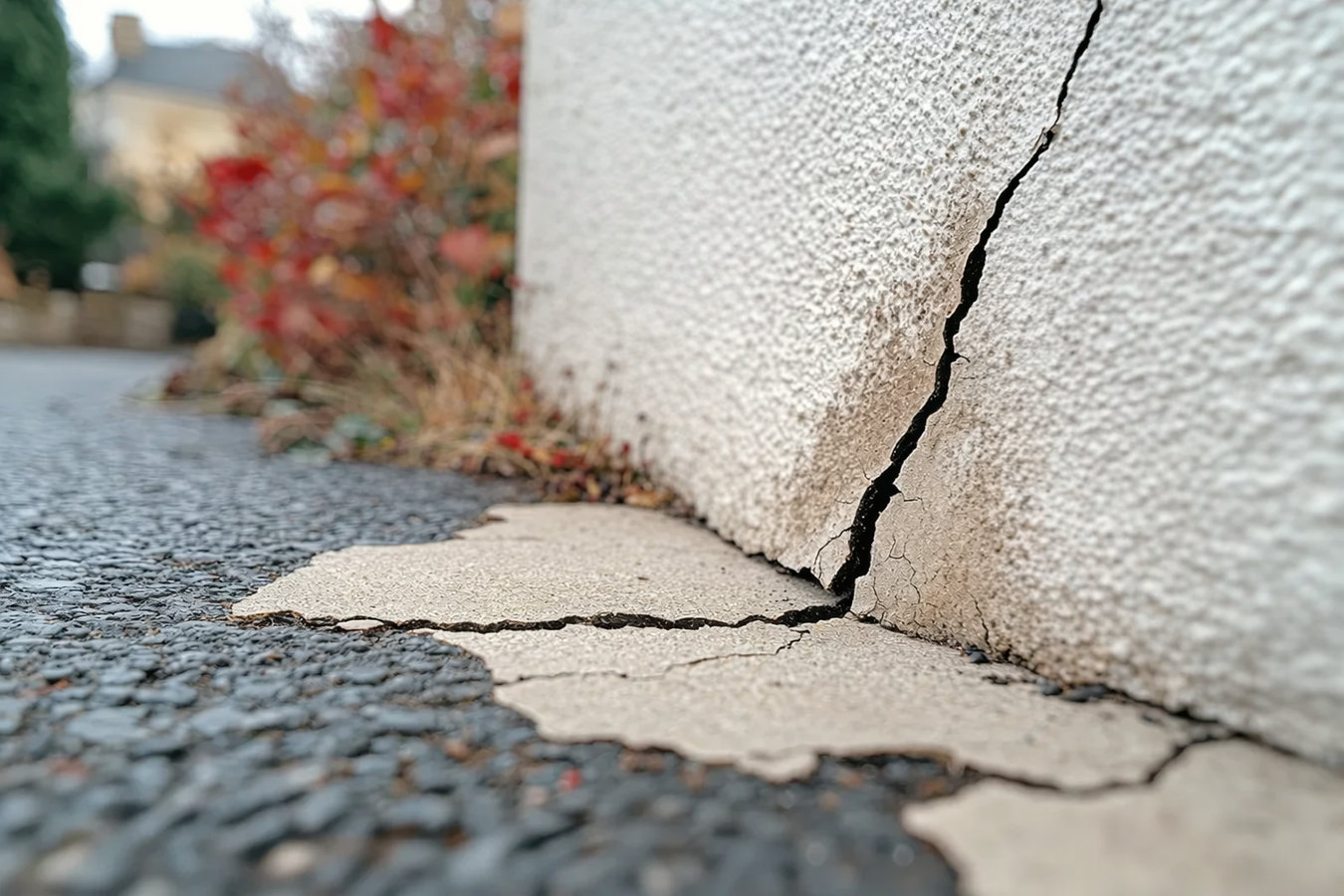
A sunken driveway, patio, or garage floor is a trip hazard and a sign of soil movement below. We lift it back to level without tearing out good concrete.
Foundation raising in Germantown, MD lifts a sunken or uneven concrete slab back to its original level by pumping material underneath it to fill the void that caused it to drop. Most residential jobs - a driveway panel, a patio section, or a garage floor - are completed in a single day, and you can typically walk on the surface within hours.
The slab itself is usually fine. What has failed is the ground beneath it. In Germantown, where clay-heavy Piedmont soil swells and shrinks with every wet spring and dry summer, that ground movement is the norm rather than the exception - especially in homes built during the 1970s and 1980s when the community was rapidly developed. Raising the slab without understanding why it sank means it will just sink again.
If the slab is too far gone to lift - badly cracked, severely deteriorated, or dropped several inches unevenly - the honest answer may be replacement rather than raising. We also provide foundation installation for situations where a new base is the right call from the start.
If your driveway, patio, or garage floor tilts, dips, or shifts slightly under your weight, the slab has likely settled unevenly. This is one of the clearest signs the soil underneath has moved. In Germantown, it often shows up in spring after a wet winter has saturated and shifted the clay-heavy soil beneath older slabs.
Look at where your driveway, front stoop, or patio meets the foundation wall or door threshold. If you can see a gap that was not there before - or one that has grown wider - the slab has dropped away from the structure. This pattern is common in Germantown homes built in the 1970s and 1980s where original soil compaction has given way over time.
A level slab sheds water away from your home. When a slab sinks, it can create low spots where water collects, or tilt the surface so water flows toward your foundation instead of away from it. Maryland's wet springs make this especially worth watching - if you notice standing water on your driveway or patio after a rainstorm, the slope may have changed.
Small hairline cracks are normal and do not always mean trouble. But if a crack has gotten wider, longer, or developed a step - where one side sits higher than the other - that is a sign the slab is moving unevenly. Take a photo and check it again in a few months. If it has changed, it is time to call.
We offer both mudjacking and polyurethane foam injection depending on what your specific slab and soil conditions call for. Mudjacking pumps a cement-and-soil slurry under the slab to fill voids and push the concrete back up - it has been the standard method for decades and tends to cost less upfront. Foam injection uses a lightweight expanding foam that hardens in minutes, holds up well in wet soil conditions, and leaves smaller holes in your slab. For homeowners whose slabs have also developed surface cracks, we can fill and seal those after lifting so water does not get back in. If your situation calls for something more structural, we also handle concrete cutting to remove and replace sections that are beyond saving, and full foundation installation when a new base is the right starting point.
Every job starts with an on-site assessment. We check how much the slab has dropped, look for the drainage or soil patterns that caused the settling, and tell you honestly whether lifting makes sense or whether replacement would serve you better. A contractor who skips that step and goes straight to drilling is guessing at the cause - and a repair that does not address the cause will not last.
Suited for driveways, patios, and garage floors where cost is a primary consideration and the soil conditions are relatively stable.
Suited for areas with wet or clay-heavy soil, tighter access points, or situations where fast curing and a lighter fill material are priorities.
Suited for slabs that have existing surface cracks that need to be sealed after lifting to prevent water infiltration and further settling.
Suited for any foundation raising project where the root cause - poor drainage, eroded base, or tree root intrusion - needs to be identified before work begins.
Most of Germantown sits on Piedmont-region soil with high clay content. Clay soil swells when it absorbs water and shrinks when it dries - and it does both repeatedly through Maryland's wet springs and dry summers. That constant movement is one of the leading reasons slabs settle and crack here, and it means a contractor who does not account for local soil behavior is likely to deliver a repair that will not last. Maryland winters add another layer: repeated freeze-thaw cycles gradually undermine the soil support beneath slabs, which is why spring is the most common time Germantown homeowners notice a slab has dropped or a crack has widened. Homes built during the community's major 1970s-to-1990s development era are now at the age where this kind of settling is predictable maintenance rather than a surprise. Maryland Geological Survey provides background on the soil composition in this region.
Montgomery County also has HOA-heavy planned communities throughout Germantown - if your home is governed by an association, you may need approval before exterior concrete work can begin. We are familiar with that process and ask about it upfront so a missing approval does not stall your project. We serve homeowners in Gaithersburg and Clarksburg as well, where the same clay soil and freeze-thaw patterns apply.
Tell us which slab is affected, how much it appears to have dropped, and whether there are visible cracks. We respond within one business day and schedule a free on-site estimate.
We walk the area with you, measure how far the slab has dropped, check crack patterns, and look for the drainage or soil conditions driving the settlement. This step is not optional - a contractor who skips it and quotes over the phone is guessing.
You receive a written estimate covering method, drill points, and expected outcome. If your job requires a Montgomery County permit - which depends on scope - we tell you at this stage and handle the application. If you are in an HOA, this is also the time to get association approval.
The crew drills small holes, injects the lifting material, monitors the slab as it rises, then patches the drill holes and cleans the work area before leaving. Walk the finished area with us before we go to confirm you are satisfied.
Free on-site estimate. Written quote before any work begins. We handle the permit check so you do not have to.
(301) 872-6617Every job starts with a site assessment that looks at why the slab sank, not just that it did. If drainage or soil issues are the cause, we tell you what needs to happen to keep it from settling again. That conversation is a sign of a contractor who cares about long-term results.
Working in Montgomery County's Piedmont clay regularly means we know how local soil behaves through wet springs, dry summers, and freeze-thaw winters. That knowledge shapes how we approach each lift - the material choice, the number of injection points, and what we tell you about drainage afterward.
Montgomery County has its own permit requirements for structural work, and many Germantown neighborhoods have HOA rules about exterior projects. We ask about both at the start and take those tasks off your plate so you are not surprised mid-project.
Some slabs are worth lifting. Others - badly cracked, severely settled, or deteriorated from decades of use - are better replaced. We will tell you honestly which situation you are in, and we will not recommend a lift if replacement is the smarter long-term investment.
Foundation raising is one of those jobs where the work you cannot see - the assessment, the material choice, the drainage conversation - matters as much as the lift itself. We combine local soil knowledge with honest advice so you get a repair that holds up through Maryland winters, not just through the next dry season. American Concrete Institute sets the industry standards our work is grounded in.
Remove and replace slab sections that are too damaged to lift, using precision saw cuts that protect the surrounding concrete.
Learn MorePour a new foundation from the ground up when an existing base is beyond repair or a new structure requires a fresh start.
Learn MoreSpring is the busiest season for slab repairs in Germantown - call now to get on the schedule before slots fill up after the ground thaws.