
Foundation raising
When an existing structure has settled unevenly, foundation raising lifts it back to level before the damage extends to walls and framing.
Learn More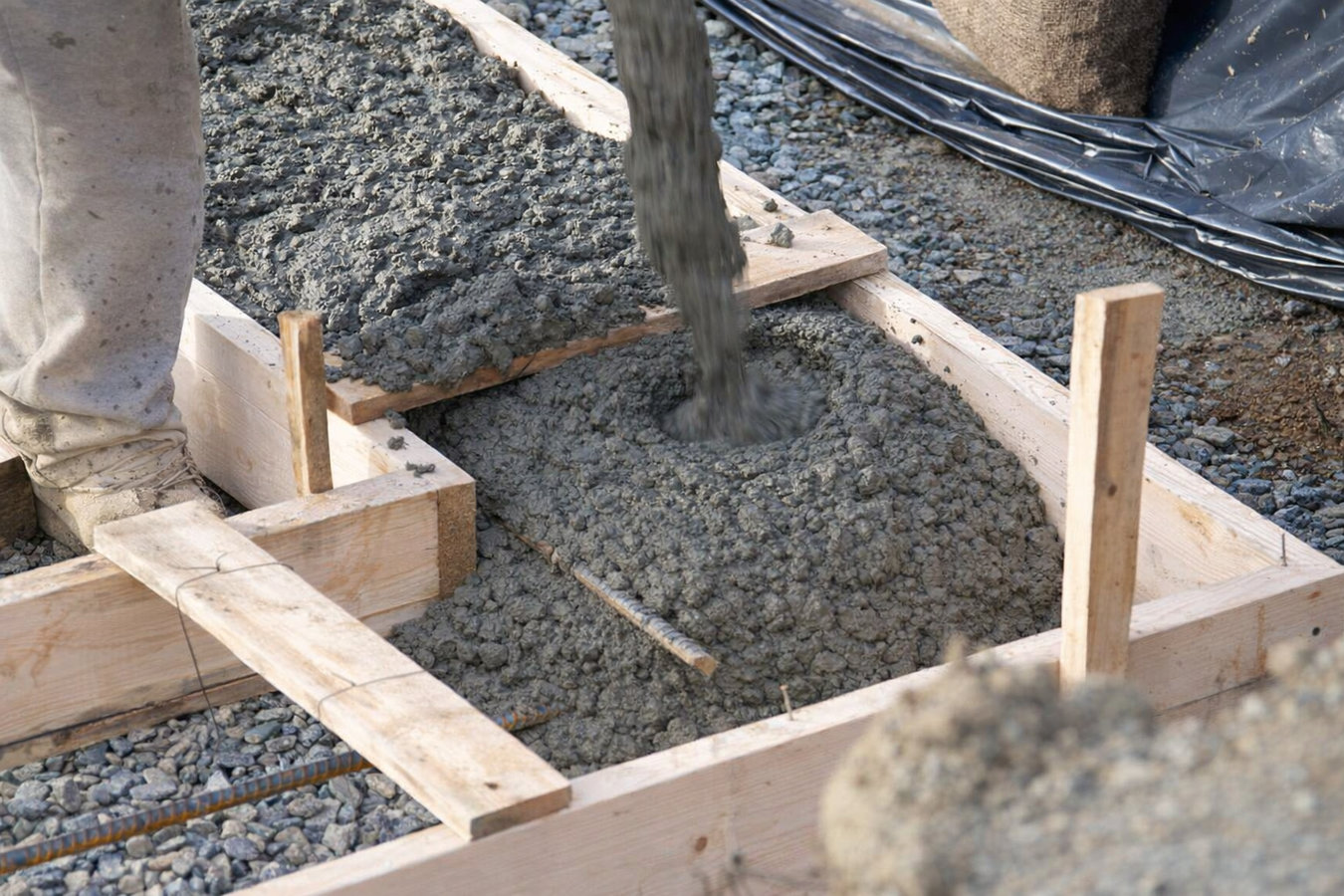
Building a deck, addition, or porch in Germantown? We dig to frost depth, pull the permit, pass the county inspection, and pour footings built for Montgomery County clay soil.
Concrete footings in Germantown means digging below the frost line - at least 30 inches in Montgomery County - setting forms, placing steel reinforcement, and pouring a base that spreads a structure's weight across stable soil. Most residential footing jobs take one to two days of active work, followed by a county inspection and a curing period before construction above can begin.
A footing is the part of your project that nobody sees once it is finished - but it is the part that determines whether your deck, addition, or porch stays level for 20 years or starts to lean within a few winters. In Germantown, where clay-heavy Piedmont soil expands and contracts with each wet and dry season, footings that are not dug to the right depth or sized correctly for the load will move. If you are building anything new that carries weight, getting the footings right is the starting point for everything else.
If your project is a larger structure, you may also need slab foundation building as the primary base - footings and slabs often work together on the same project, and we can handle both so the scopes are coordinated from the start.
If your deck feels springy underfoot, or if one side has visibly dropped lower than the other, the footings below may have shifted or settled. In Germantown's clay-heavy soil, this kind of movement is common in structures that are 20 or more years old, especially after a wet winter followed by a dry summer. A leaning deck is a safety issue, not just a cosmetic one.
Any new structure attached to or near your home that will carry weight needs proper footings before anything else is built. This is true even for freestanding structures like larger sheds - Montgomery County's permit requirements apply to more projects than most homeowners realize. Starting without properly permitted footings can create problems at resale.
Diagonal cracks running from the corners of doors or windows - especially if they have grown over time - can signal that a structural support is settling unevenly. This does not always mean the footings have failed, but it is a sign worth having a professional look at before the problem gets worse.
Homes built during Germantown's major development era often have footings sized to older standards. After 40 to 50 years of freeze-thaw cycles in Montgomery County's climate, original footings under decks and additions may have shifted or degraded. If you have never had them looked at, a visual check is a reasonable starting point before building anything on top of them.
Our footing work covers everything from permit application and 811 utility marking through excavation, form setting, steel reinforcement placement, the concrete pour, and backfilling after the forms come off. We dig to the depth Montgomery County requires - at least 30 inches below grade - and size each footing for the load it will carry rather than using a one-size-fits-all approach. A county inspector verifies the depth before we pour, which means the work is on record and will not create problems during a future home inspection or sale.
For projects that go beyond individual footings, we also build foundation raising for structures that have settled and need to be lifted back to level, and slab foundations for new construction that requires a continuous concrete base. If your project involves multiple foundation elements, we can coordinate the full scope so nothing falls through the cracks between scopes.
Suited for new decks, porches, and pergolas that need post footings dug to frost depth and sized for the structure's weight and span.
Suited for room additions and home extensions that require continuous or spread footings to support new exterior walls.
Suited for retaining walls, outbuildings, and site structures that need a footing capable of handling both vertical load and lateral soil pressure.
Suited for existing structures where original footings show movement, cracking, or degradation after decades of local freeze-thaw cycles.
Montgomery County sets the local frost depth at approximately 30 inches, which means footing work in Germantown requires deeper digging than in warmer parts of the country - and it is not a recommendation, it is a requirement the county inspector verifies before concrete is poured. Germantown also sits on Piedmont Plateau clay soils that expand when wet and contract when dry, which puts ongoing pressure on footings that are not sized and placed to account for that movement. A concrete contractor who quotes you based on shallower digging or ignores soil conditions is setting you up for a structure that will shift within a few winters. The combination of frost depth requirements and clay soil is specific to this region, and it is why local experience matters on footing work more than on many other concrete jobs. Germantown's housing stock also skews toward 1970s and 1980s construction, meaning many homes have original footings that are 40 to 50 years old and worth examining before any new structure is built on top of them.
Montgomery County requires a building permit for most structural footing work, and the permit timeline affects your project schedule in ways that out-of-area contractors often do not account for. We handle the full application and manage the inspection so your project does not stall. We work regularly with homeowners in Clarksburg and Montgomery Village, where the mix of newer and older housing stock means footing needs vary widely from one property to the next. We assess each site on its own terms rather than applying a generic approach.
Tell us what you are building or repairing and roughly where on your property it sits. We respond within one business day and schedule a site visit before giving any price - accurate footing quotes require seeing the soil conditions and site access in person.
We assess the excavation area, evaluate access for equipment, and give you a written, itemized estimate. Once you approve, we file for the Montgomery County building permit on your behalf. Permit review typically takes a few days to a few weeks - we factor this into your project schedule upfront.
Before any digging, we call 811 - Maryland's free utility-marking service, required by state law - to have underground lines flagged. Then we excavate to the required depth, set wooden forms, and place steel reinforcement. A county inspector verifies depth and dimensions before we pour.
After inspection approval, we pour the concrete, work it to remove air pockets, and level the surface. Forms typically come off within a day or two, but the footing needs about four weeks to reach full strength. We walk you through what was done before we leave the site.
Free on-site estimate. We handle the permit and county inspection. No surprises on the final bill.
(301) 872-6617Montgomery County requires footings at least 30 inches below grade, and we dig to that depth on every job - not to the minimum, but to what the soil conditions actually call for. The county inspector confirms it before we pour, so there is no question about whether the work was done correctly.
We handle the full Montgomery County permit application and coordinate the inspection schedule so you never have to navigate the permitting office yourself. Footing work that skips the permit is a liability that can surface during any future home sale - we make sure your project closes out with a clean county record.
Germantown and the surrounding Montgomery County area have Piedmont Plateau clay soils that behave differently from the ground in many other parts of the country. We size and place footings to account for the expansion and contraction this soil goes through every season, which is what prevents the gradual shifting that shows up as a leaning deck a few years after installation.
Maryland law requires calling 811 before any excavation, and we do it on every job without exception. Underground utility lines - gas, electric, water, cable - get flagged before the crew breaks ground, protecting both your property and the crew.
Footing work is invisible once it is done - but it determines whether everything above it stays solid for decades. We build every footing to pass inspection and hold up through Montgomery County winters, so the structure you are building on top of it stays level long after we are off the site. You can learn more about concrete footing standards from the American Concrete Institute, and county-specific requirements through the Montgomery County Department of Permitting Services.
When an existing structure has settled unevenly, foundation raising lifts it back to level before the damage extends to walls and framing.
Learn MoreFor new construction that needs a continuous reinforced concrete base rather than individual post footings - including homes, garages, and additions.
Learn MoreSpring slots fill fast in Montgomery County - lock in your start date before the busy season closes out and permit lead times push your project to fall.